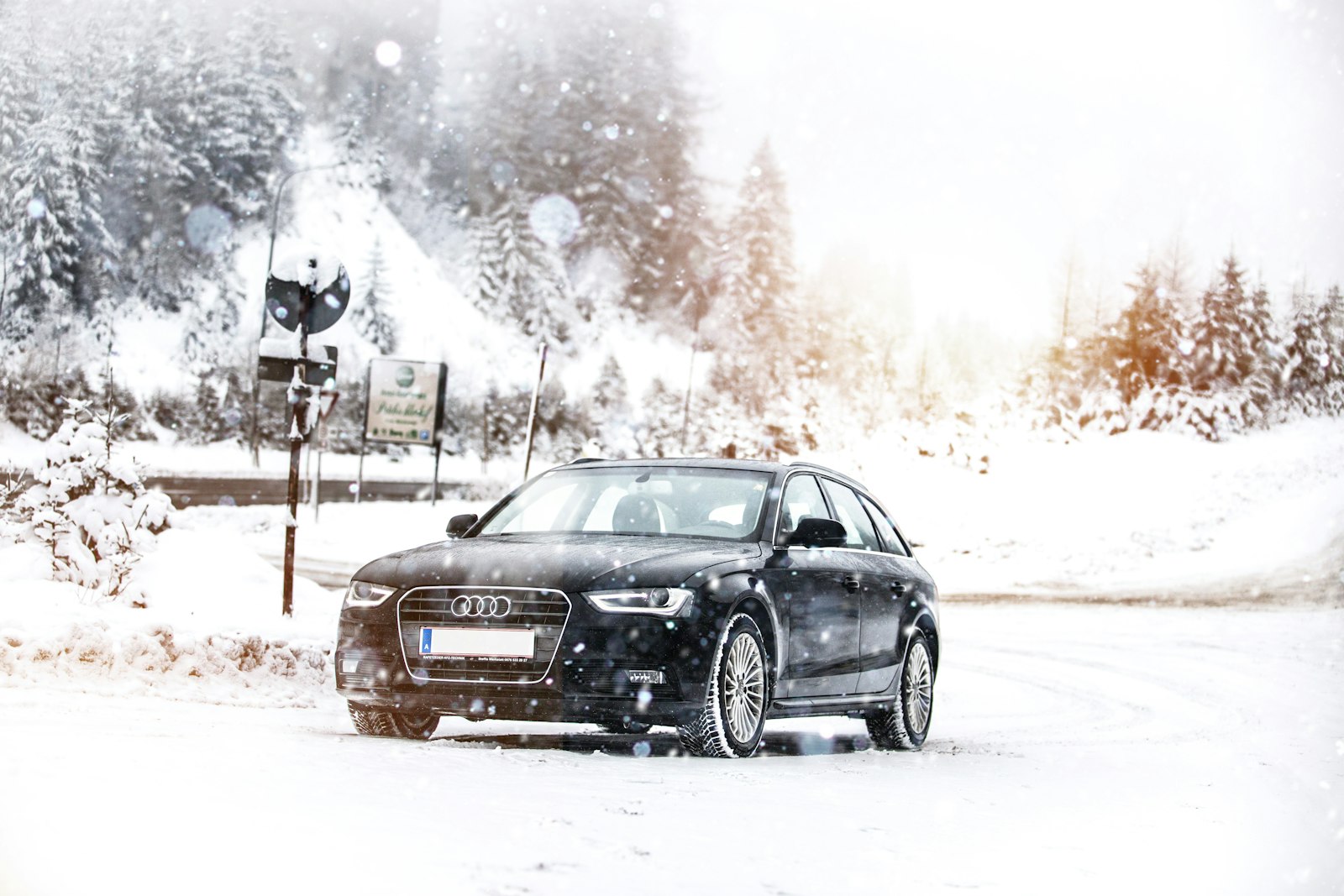
In a car you do not have to change tyres before 1 December, but from that date until 31 March you must have winter tyres whenever the road is wintry. A vehicle whose model year in the vehicle register is 30 years or older is exempt. Snow, ice, slush or frost on any part of the road counts, and the police decide on the spot whether the conditions apply. A frosty stretch of road on a December morning is therefore enough. Studded tyres are allowed from 1 October, so you can fit them now. Before you choose studs, check where you drive: studded tyres are banned all year round on nine streets in Stockholm, Gothenburg and Uppsala.
When do I have to have winter tyres on my car?
Between 1 December and 31 March, and only when there are wintry road conditions. The rule in the Swedish traffic ordinance covers passenger cars, motorhomes, light lorries, light buses and the trailers they tow. Outside those dates there is no requirement for these vehicles, whatever the weather.
Wintry road conditions mean snow, ice, slush or frost on any part of the road. You do not need the whole road to be white. If the police stop you on a road where there is frost in the shade, the requirement applies there and then.
Heavy lorries and heavy buses follow a calendar of their own. They must have winter tyres from 10 November to 10 April, whether or not the road is wintry.
What counts as a winter tyre?
A tyre that is studded, or a tyre without studs marked with the alpine symbol, a mountain with three peaks and a snowflake. A tyre marked only M+S does not count on a car up to 3.5 tonnes. On a motorhome over 3.5 tonnes, M+S tyres are accepted on axles other than the front axle and the driving axles. A trailer with a total weight of up to 3.5 tonnes may run on M+S tyres made for winter conditions until 30 November 2028.
The tread must be at least 3 millimetres deep when the road is wintry, and at least 5 millimetres on a motorhome with a total weight over 3.5 tonnes. Some tyres without studs also carry an ice grip marking, which shows that the tyre has met test limits for grip on ice. That marking is voluntary, and a tyre without it is still a legal winter tyre.
Does the rule apply to a rented or foreign-registered car?
Yes. The requirement applies to vehicles registered in Sweden and abroad alike, and the driver can be fined if the car is on a wintry road without winter tyres. Ask the rental company which tyres the car has before you drive off, and look for the alpine symbol or studs yourself if you are unsure. If you are still driving on the licence you brought with you, the rules on how long it stays valid are in our guide to driving in Sweden on a foreign licence.
Can I fit studded tyres now?
Yes. Studded tyres are allowed from 1 October to 15 April. Outside that period you may use them only when wintry road conditions apply or are expected.
Three further rules apply to studded tyres on cars and trailers:
- All four tyres must be studded. A mix of studded and unstudded tyres is not allowed.
- When the road is wintry, a trailer towed by a car with studded tyres must also have studded tyres.
- A car on unstudded tyres may tow a trailer with either studded or unstudded winter tyres.
Should I choose studs or friction tyres for city driving?
Both are legal winter tyres, so the choice turns on where you drive and how much ice you expect. Studded tyres are banned on some city streets to lower the levels of harmful particles in the air. If your daily route runs along one of the streets in the table below, you cannot use studded tyres there.
Friction tyres, the Swedish name for winter tyres without studs, vary a great deal on ice. Tyres made for Nordic conditions and tyres made for central Europe can both carry the alpine symbol, so look for the ice grip marking as well. A longer comparison of friction and studded tyres, including braking distances on ice, is available in Swedish.
Which streets ban studded tyres?
A municipality may ban studded tyres on a street, a stretch of road or a whole area by local traffic regulation. The bans below have no time limit, so they apply all year, and they are marked with a sign. As of 10 November 2026, studded tyres are banned on these stretches, each linked to its regulation in the national register of local traffic regulations. A ban covers only the signposted stretch given in the table, not the rest of the street:
| City | Street and stretch |
|---|---|
| Stockholm | Hornsgatan, eastbound between Långholmsgatan and Lignagatan, westbound between Götgatan and Bellmansgatan, and in marked stretches between Lignagatan and Bellmansgatan in both directions |
| Stockholm | Rosenlundsgatan between Krukmakargatan and Hornsgatan |
| Stockholm | Varvsgatan between Hornsbruksgatan and Hornsgatan |
| Stockholm | Fleminggatan between Kungsbroplan and Igeldammsgatan, in both directions |
| Stockholm | Kungsgatan between Sveavägen and Birger Jarlsgatan |
| Gothenburg | Friggagatan between Ranängsgatan and Odinsplatsen |
| Gothenburg | Odinsgatan between Odinsplatsen and Polhemsplatsen |
| Uppsala | Kungsgatan between S:t Olofsgatan and Strandbodgatan, in marked stretches |
| Uppsala | Vaksalagatan between Kungsgatan and Storgatan |
In Stockholm you may cross Hornsgatan, Fleminggatan and Kungsgatan on studded tyres. Other towns can introduce bans of their own, so watch for the sign.
What does it cost if I get it wrong?
The fines are on-the-spot fines set nationally by the Prosecutor-General, so they are the same across Sweden. The amounts below are from the schedules for offences against the traffic ordinance and vehicle equipment.
| Offence | Fine |
|---|---|
| No winter tyres on a wintry road, 1 December to 31 March | 2,000 SEK for the driver, and the owner can be fined another 2,000 SEK |
| Driving with studs on a street where they are banned | 1,000 SEK |
| Studded and unstudded tyres on the same car | 1,000 SEK |
| Trailer without studs behind a car with studded tyres | 1,000 SEK |
| Tyres with too little tread | 1,200 SEK |
| Studded tyres outside the permitted period | 500 SEK |
The owner is fined only if he or she has not done what could reasonably be expected to stop the car being driven without winter tyres. The fines for speeding, phones and right of way are in our overview of Swedish traffic rules. If you need a Swedish licence and would rather learn in English, you can find an English-speaking driving school.
Last fact-checked: 10 November 2026